The Waning of Marriage

Marriage 1Right now at the church where I serve, we are in a series on marriage called “We Do.” As I see it, this series is important not only because many marriages are in trouble and in need of help, but because many marriages are not even getting started in the first place. The precipitous decline of marriage in this country is well documented. Take, for instance, the recent alarm sounded by Robert J. Samuelson of The Washington Post:

In 1960, only 12 percent of adults ages 25 to 34 had never married; by the time they were 45 to 54, the never-married share had dropped to 5 percent. Now fast forward. In 2010, 47 percent of Americans 25 to 34 had never married.[1]

Marriage rates are in a free-fall. But Samuelson’s explanation as to why marriage rates are tumbling is especially fascinating to me:

The stranglehold that marriage had on middle-class thinking and behavior began to weaken in the 1960s with birth control pills, publication of Betty Friedan’s The Feminine Mystique — an assault on women’s traditional housecleaning and child-rearing roles — and the gradual liberalization of divorce laws.

The resulting expansion of personal choice has been breathtaking. Those liberalized divorce laws have freed millions of women and men from unsatisfying or abusive marriages. (From 1960 to 1980, the divorce rate rose nearly 150 percent; it has since reversed about half that gain.) Taboos against premarital sex and cohabitation have virtually vanished. So has the stigma of out-of-wedlock birth or, for married couples, of not having children. With more job opportunities, women flooded the labor market.

Samuelson connects the decline of marriage to the “expansion of personal choice.” In other words, the more choices a person has – from the choice of pre-marital sex to birth control to cohabitation to divorce – the lower the chance a person will choose to marry or, as the case may be, stay married.

Sadly, the “expansion of personal choice” does not insure against the unintended and often painful consequences of personal choice. Samuelson cites Isabell Sawhill, author of Generation Unbound: Drifting into Sex and Parenthood without Marriage:

“New choices for adults,” Sawhill writes, “have not generally been helpful to the well-being of children.” Single-parent families have exploded. In 1950, they were 7 percent of families with children under 18; by 2013, they were 31 percent. Nor was the shift isolated. The share was 27 percent for whites, 34 percent for Hispanics and 62 percent for African Americans. By harming children’s emotional and intellectual development, the expansion of adult choices may have reduced society’s collective welfare.

It is not (as Sawhill repeatedly says) that all single-parent households are bad or that all two-parent families are good. But the advantage lies with the approach that can provide children more financial support and personal attention. Two low-income paychecks, or two good listeners, are better than one. With a colleague, Sawhill simulated the effect today if the marriage rates of 1970 still prevailed. The result: The child poverty rate would drop by about 20 percent — a “huge effect” compared with most government programs.

Our emancipation from marriage comes with a price – a price born by the children of those who have emancipated themselves from marriage. A higher poverty rate is the price most easily measured, but other things, such as the lack of “two listening ears” Sawhill refers to, are also among the prices our children must pay.

I am well aware, of course, that there are certain situations where a person should not get married or cannot stay married. But these situations are far fewer and farther between than our culture makes them out to be.

At the heart of our marriage-phobia is the fact that marriage calls on us to think beyond ourselves, which is not easy when we have all the freedom in the world to make decisions for ourselves. It turns out that when we are given unrestrained freedom to make decisions, we make selfish ones.

But this is where the Church has much to offer. We do, after all, worship a Savior who not only thought beyond Himself, but lived beyond Himself and died by Himself so we could be a family in God.

Ultimately, as followers of Christ, our hope is for a marriage on the Last Day when it will be sung: “Hallelujah! For our Lord God Almighty reigns. Let us rejoice and be glad and give Him glory! For the wedding of the Lamb has come, and His bride has made herself ready” (Revelation 19:6-7).

If this is what we’re preparing and hoping for, we might as well get a little practice for our marriage on the Last Day by being married in this day. And that’s why marriage is good – even if it isn’t always easy.

____________________

[1] Robert J. Samuelson, “The family deficit,” The Washington Post (10.26.2014).

We’ve Only Just Begun

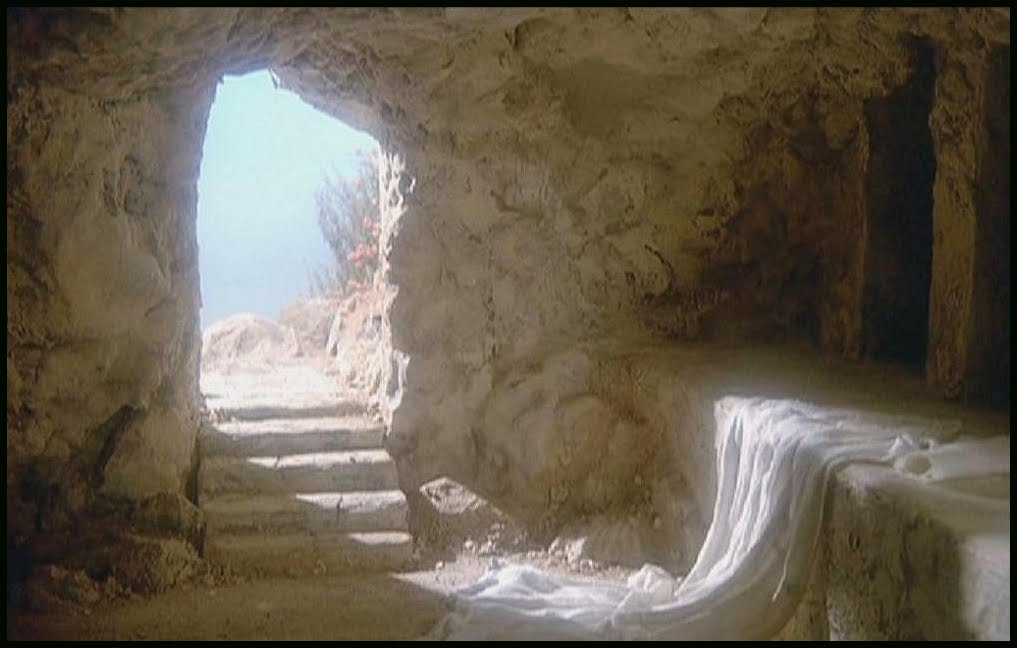
Empty Tomb 1As a kid, I remember a song my mom used to play from the 70’s by the Carpenters called  “We’ve Only Just Begun.”  The song is about a couple’s wedding day and imagines all the things still to come in their relationship.  “We’ve only just begun to live,” the song muses.

The message of this golden oldie is a message I often share with the soon-to-be-wedded couples I counsel.  “The wedding day is a big day,” I will say, “but it is only one day.  Don’t just plan for your wedding day.  Plan for all the days that come after your wedding day.  After all, when you walk down that aisle and make your vows, you’ve only just begun.”

Yesterday, we celebrated the resurrection of Christ.  The apostle Paul summarizes Christ’s resurrection thusly:

For what I received I passed on to you as of first importance: that Christ died for our sins according to the Scriptures, that He was buried, that He was raised on the third day according to the Scriptures. (1 Corinthians 15:3-4)

For Paul, Christ’s death for our sins and resurrection three days later is “of first importance.”  The Greek word for this phrase is protos, from which we get our word “prototype.”  A prototype, of course, is a first run of a product or procedure meant to be a test for what comes after it.  And this is precisely what Christ’s resurrection is.  For, according to Paul, Christ’s resurrection – glorious as it is – is only the beginning.  Paul explains:

Christ has indeed been raised from the dead, the firstfruits of those who have fallen asleep. For since death came through a man, the resurrection of the dead comes also through a man. For as in Adam all die, so in Christ all will be made alive. (1 Corinthians 15:20-22)

Paul argues that in Christ’s resurrection on Easter Day, God was doing a test run for our resurrections on the Last Day.  As glorious as Easter is, then, it is only a foretaste of what is to come.  It is only a prototype for the big roll out of resurrection and life that will burst forth at Christ’s return.  God has “only just begun” to raise people from death.  An even bigger Easter is still on its way – an Easter when we will not only shout, “Christ has risen,” but, “We have risen!”

Luther on Christ’s Resurrection…And Ours

Resurrection 6On this Easter Monday, I thought I would share with you some words from a series of seventeen sermons preached by Martin Luther in 1533 on 1 Corinthians 15.  In this chapter, the apostle Paul speaks of the resurrection of Christ and the hope and assurance that it gives us that we too will be raised on the Last Day:

Because Christ is risen and gives us His resurrection against our sin, death, and hell, we must advance to where we also learn to say: “O death, where is thy sting?” [1 Corinthians 15:55] although we at present see only the reverse, namely, that we have nothing but the perishable hanging about our neck, that we lead a wretched filthy life, that we are subject to all sorts of distress and danger, and that nothing but death awaits us in the end.

But the faith that clings to Christ is able to engender far different thoughts. It can envisage a new existence.  It can form an image and gain sight of a condition where this perishable, wretched form is erased entirely and replaced by a pure and celestial essence.  For since faith is certain of this doctrine that Christ’s resurrection is our resurrection, it must follow that this resurrection is just as effective in us as it was for Him – except that He is a different person, namely, true God.  And faith must bring it about that this body’s frail and mortal being is discarded and removed and a different, immortal being is put on, with a body that can no longer be touched by filth, sickness, mishap, misery, or death but is perfectly pure, healthy, strong, and beautiful…

God did not create man that he should sin and die, but that he should live.  But the devil inflicted so much shameful filth and so many blemishes on nature that man must bear so much sickness, stench, and misfortune about his neck because he sinned.  But now that sin is removed through Christ, we shall be rid of all of that too.  All will be pure, and nothing that is evil or loathsome will be felt any longer on earth. (AE 28:202-203)

Luther’s final words beautifully summarize the hope of Easter:  “All will be pure, and nothing that is evil or loathsome will be felt any longer on the earth.”  Because Christ is risen, the evils of sin and death will be destroyed.  Or, in the words of the poet John Donne, because of Easter, “death, thou shalt die!”

Christ is risen!  And this means you will too.

A Life That Ended Too Soon…At 116 Years

Besse Cooper
Besse Cooper (Photo: David Goldman, AP)

Last Tuesday afternoon, Besse Cooper of Monroe, Georgia passed away peacefully.  She was 116 years of age.  She was also the world’s oldest woman.[1]

I was doing the math in my head.  And though I don’t know her birthday so my I may be a year off on some of my calculations, I’m still pretty close.  Besse Cooper was born in 1896.  This means when the Titanic sank, she was sixteen.  When the United States entered World War I, she was twenty-one.  When the stock market crashed the Great Depression hit, she was thirty-three.  When Pearl Harbor was bombed, she was forty-five.  When John F. Kennedy was assassinated, she was comfortably settled into retirement at sixty-seven.  When Apollo 11 landed, she was seventy-three.  And when 9/11 rocked our nation, she had passed the century mark at one hundred and five.

As I thought back over all the events to which this woman had been witness, even if only from afar, I stood in awe.  A lot of history happens in 116 years!  And yet, even a life as long and robust and Mrs. Cooper’s is hardly a hairbreadth long in the eyes of the God who gives it.  The Psalmist puts it bluntly:  “Man is like a breath; his days are like a fleeting shadow” (Psalm 144:4).  On the stage of history as a whole, 116 years occupies nary a dark corner.

Though the biblical writers may look at life as fleeting, they nevertheless do not resign themselves fatalistically to its end.  Instead, they kick mightily against the truncated span of life.  The prophet Isaiah notes that a life that lasts a mere century – or perhaps a little more – has not lasted nearly long enough!  He yearns for a world where “he who dies at a hundred will be thought a mere youth” (Isaiah 65:20).  Even one hundred years is not enough for Isaiah.  He wants more.

Finally, the problem the biblical writers have has nothing to do with when life comes to end, but with that life comes to end.  A life that ends – be that at ten days, ten months, ten years, or ten years times ten years – is a life that ends too soon.  And indeed, this is true.  For God, when He gave us life, intended life to be a gift we keep.  He intended life to be a gift that lasts.

Sin, of course, had other plans.  But this is why Christ came on a mission – to recapture and raise, by His resurrection, people who die way too soon.  To recapture and raise, by His resurrection, people who die at all.  Like Besse Cooper.  May she rest in peace.  But better yet, may she wake at the telos’s trumpet.


[1] Associated Press, “Woman, 116, listed as ‘world’s oldest’ dies in Ga.,” USA Today (12.5.2012).

Resurrection, It Does a Body Good!

In his book, The Historical Jesus, John Dominic Crossan says of Jesus’ resurrection, “Nobody knew what had happened to Jesus’ body.”[1]  Crossan is well known for asserting that Jesus’ resurrection was not a bodily resurrection, but a series of mystical visions experienced by and subsequently promoted by early Christians.  As for the fate of Jesus’ body after death, Crossan believes it was thrown in a shallow grave where it was quickly scavenged by wild animals.[2]  And Crossan is not alone in his belief.  Incredulous at the notion that a dead person can physically rise, many post-Enlightenment thinkers and theologians will speak of Christ’s resurrection as one that took place merely in the minds or hearts of His earliest followers.

The biblical account of Christ’s resurrection is not nearly so scientifically sterilized as Crossan and others make it out to be.  Whatever these people may believe about Christ’s fate after His crucifixion, the biblical authors believed that Christ rose bodily.  Indeed, this is Paul’s argument in 1 Corinthians 15:

Christ has indeed been raised from the dead, the firstfruits of those who have fallen asleep…So will it be with the resurrection of the dead. The body that is sown is perishable, it is raised imperishable; it is sown in dishonor, it is raised in glory; it is sown in weakness, it is raised in power. (1 Corinthians 15:20, 42-43)

Paul’s argues that Christ’s bodily resurrection is the first resurrection in a long line of bodily resurrections that will come on the Last Day.  The bodies of believers, once perishable, will be raised imperishable.  The bodies of believers, born into the dishonor of sin, will be raised into the glory of perfection.  The bodies of believers, formerly weakened by the Fall, will be raised in eternal power.  The resurrection, Paul says, is bodily.  And not just Christ’s resurrection is bodily, our resurrections are too.

Jesus Himself speaks to the corporal nature of His resurrection when He appears to His disciples:

While they were still talking about this, Jesus Himself stood among them and said to them, “Peace be with you.” They were startled and frightened, thinking they saw a ghost. He said to them, “Why are you troubled, and why do doubts rise in your minds? Look at My hands and My feet. It is I Myself! Touch Me and see; a ghost does not have flesh and bones, as you see I have.” When He had said this, He showed them His hands and feet.  And while they still did not believe it because of joy and amazement, He asked them, “Do you have anything here to eat?”  They gave Him a piece of broiled fish, and He took it and ate it in their presence. (Luke 24:36-43)

Jesus will not have His resurrection mistaken by His disciples for a measly apparition.  This is why He invites His disciples to look at and touch His hands and His feat.  This is why He eats a piece of fish.  Jesus has risen bodily.

So why is this even important?  Why make such hay out of whether or not Jesus rose bodily?  Three reasons come to mind.  First, the bodily resurrection of Christ is the linchpin of our faith.  To deny this is to lose everything.  As the apostle Paul writes, “If Christ has not been raised, your faith is futile; you are still in your sins” (1 Corinthians 15:17).  To deny the resurrection of Christ is to deny all of Christ and His work.  There can be no compromise on His resurrection.  Second, the bodily resurrection of Christ affirms the goodness of God’s creation.  God created bodies.  And He cares about bodies.  Christ’s resurrection is proof of this.  For God could not stand by to see His Son’s body wrecked and ruined by a cross.  And God will not stand by to see our bodies and wrecked and ruined by sin.  And this leads to the third reason Jesus’ bodily resurrection is so important.  The bodily resurrection of Christ is a promise our bodily resurrections on the Last Day.  The fact of the matter is this:  our God is just getting going when it comes to resurrections.  One day, graves will be emptied, death will be defeated, and the redeemed of the Lord will cry,  “Where, O death, is your victory?  Where, O death, is your sting” (1 Corinthians 15:55).  What a glorious day this will be.  And this is why I believe in the resurrection of Jesus’ body and in the resurrection of mine.  For such a resurrection is the hope and promise of life everlasting.


[1] John Dominic Crossan, The Historical Jesus (San Francisco:  HarperSanFrancisco, 1991), 394.

[2] John Dominic Crossan, Jesus: A Revolutionary Biography (San Francisco, HarperSanFrancisco, 1994), 160.