Joy in Trials

Credit: Quang Anh Ha Nguyen / Pexels.com

I love joy.

I love watching a child’s eyes light up when dessert is served. I love watching a dog wag its tail in anticipation of fetching a tennis ball. I love watching a couple on their wedding day look into each other’s tearful eyes and hold each other’s hands tight.

I love joy.

And yet, joy can sometimes be tough to come by – or at least to sustain.

Joy is often overcome by anger when we see injustice in our world. Or it is overtaken with loneliness when we feel isolated with no one to talk to. Or it is overwhelmed by grief when we lose a husband, a wife, a son, a daughter, or another loved one.

The prophet Habakkuk ministered to the nation of Israel during a season when joy was tough to come by. The nation of Israel had fallen into spiritual corruption and the Babylonians were on their way to attack – and eventually conquer – Habakkuk’s home. In the midst of all this, Habakkuk, as most of us would, struggled to find joy. He opens his book by questioning – and implicitly accusing – God:

How long, Lord, must I call for help, but You do not listen? Or cry out to You, “Violence!” but You do not save? Why do You make me look at injustice? Why do You tolerate wrongdoing? (Habakkuk 1:2-3)

“Nothing is going well,” Habakkuk complains. “There is no reason to have joy.”

Except that, according to Habakkuk, there is.

Habakkuk closes his book:

Though the fig tree does not bud and there are no grapes on the vines, though the olive crop fails and the fields produce no food, though there are no sheep in the pen and no cattle in the stalls, yet I will rejoice in the Lord, I will be joyful in God my Savior. (Habakkuk 3:17-18)

“Even when all else fails and is lost,” Habakkuk writes, “I still have the Lord. And He is enough for me to have joy.”

The apostle Paul writes, “Rejoice always” (1 Thessalonians 5:16). This injunction, at first read, feels impossible. We can understand rejoicing, but to do so always seems ridiculous. But if Paul gives us the “what we are to do,” Habakkuk gives us the “how we are to do it.” We are to be joyful in God our Savior. Joy found in things other than the Lord will always come and go because other things always come and go. Joy found in anything other than the Lord is ultimately unsustainable. But joy that is in the Lord can endure always – because He is with us always. Find your joy in Him.

Less Anger and More Smiles

grayscale-photo-of-laughing-old-man-156731.jpg

According to Guinness World Records, we have a new world’s-oldest-male:

A Japanese man with a sweet tooth who believes in smiles has become the world’s oldest male at 112 years … Chitetsu Watanabe, who was born in Niigata in northern Japan in 1907, received a certificate for his accomplishment on Wednesday at a nursing home in the city. The previous record holder, Masazo Nonaka, another Japanese, died last month. 

As is often the case with aged people, Mr. Watanabe was asked about to what he credits his longevity. He answered, “Don’t get angry and keep smiling.”

In a society that has no shortage of anger, Mr. Watanabe certainly offers some contrarian advice. And yet, medically, Mr. Watanabe just might be right. Study after study has shown that, although anger can be helpful in flashes to solve big problems, sustained anger, if not directly, is at least secondarily damaging to your health. Dr. Michael Kutcher, an interventional cardiologist at Wake Forest Baptist Medical Center, explains:

It’s kind of an adjunctive risk factor. It’s not of and by itself a cause of coronary artery disease or a cause of heart disease. But if the anger is sustained and the blood pressure is affected and the heart rate is affected, that indirectly can lead to coronary disease or disease of the heart muscle.

John Schinnerer, an anger management coach in Danville, California, links anger to a whole host of health problems:

It’s been linked to obesity, low self-esteem, migraines, drug and alcohol addiction, depression, sexual performance problems, increased heart attack risk, lower-quality relationships, higher probability of abusing others emotionally or physically or both, higher blood pressure, and stroke.

In short, anger is something you don’t want to mess around with.

Perhaps Jesus’ brother James was on to something when he wrote: “Human anger does not produce the righteousness that God desires” (James 1:20). And perhaps Solomon really was wise when he wrote: “Do not be quickly provoked in your spirit, for anger resides in the lap of fools” (Ecclesiastes 7:9).

Although Christians sometimes talk about a “righteous anger” at the sinfulness and brokenness of this world, we must admit that our appeals to “righteous anger” can be, at times, just thin justifications for anger that is far more sinful than it is saintly. Our anger can be more often self-interested than justice-oriented. I would also point out that, even when the Bible does speak of “righteous anger,” it is immediately followed by a warning: “In your anger do not sin” (Ephesians 4:26). The line between righteous and unrighteous anger, it turns out, is razor thin.

Living life with joy rather than anger seems to be a much safer proposition. The apostle Paul encourages us: “Rejoice in the Lord always. I will say it again: Rejoice” (Philippians 4:4)! Joy is so good, Paul says, it is something we should have “always.” Why? Well, I can’t guarantee that it’ll help you live to 112. But it will be a blessing to those around you. And they’re reason enough to smile.

Growing Homes and Envious Hearts

StockSnap_LJ515CPAKI.jpg
Credit: Binyamin Mellish / Stock Snap

Not long before our second child was born, my wife and I decided that it was time to upsize the square footage of our home.  Kids, it turns out, come with lots of stuff.  Our first home was a testament to that.  Closets and corners were packed with everything from diapers to clothes to lots and lots of toys.  We wanted enough room to spread out and stretch out a bit.  So, we put our home on the market and moved into a new, larger home, which, as you probably have already guessed, now has closets and corners packed with even more kids’ stuff.  No matter how much space you have, you always seem to find stuff to fill it.

The move toward larger homes is a decades-old trend.  Joe Pinsker, in an article published last week for The Atlantic, writes:

American homes are a lot bigger than they used to be.  In 1973, when the Census Bureau started tracking home sizes, the median size of a newly built house was just over 1,500 square feet; that figure reached nearly 2,500 square feet in 2015.

This rise, combined with a drop in the average number of people per household, has translated to a whole lot more room for homeowners and their families: By one estimate, each newly built house had an average of 507 square feet per resident in 1973, and nearly twice that – 971 square feet – four decades later.

But according to a recent paper, Americans aren’t getting any happier with their ever bigger homes.  “Despite a major upscaling of single-family houses since 1980,” writes Clément Bellet, a postdoctoral fellow at the European business school INSEAD, “house satisfaction has remained steady in American suburbs.”

Larger homes, Mr. Pinsker reports, are not making for happier families.  Why?  It’s not because we don’t like the extra space.  I certainly appreciate the space in my home – and so do others.  It turns out that our happiness has very little to do with the amount of space we have in our own homes.  Instead, it has to do with the amount of space our neighbors have in their homes:

The largest houses seem to be the ones that all the other homeowners base their expectations on … Bellet sketches out an unfulfilling cycle of one-upmanship, in which the owners of the biggest homes are most satisfied if their home remains among the biggest, and those who rank right below them grow less satisfied as their dwelling looks ever more measly by comparison.

In other words, we’re satisfied with what we have until we see what somebody else has.  In this way, our dissatisfaction with our homes isn’t really a home problem.  It’s a heart problem.  It’s a struggle with envy.

Envy is a sin that’s virtually as old as, well, dirt.  When Adam is first fashioned out of dirt, it is envy that brings him down when Satan tempts he and his wife with the specter that they can “be like God” (Genesis 3:5).  “Instead of being created from dust by God,” Satan says, “you can be sovereigns with glory like God’s.  Why live in a Garden when you can reign from heaven?  I’m pretty sure heaven has more square footage.  Wouldn’t that be nice?”  Satan hooks Adam and Eve by appealing to their envy.  And so, in envy, they try to stage a coup against God.  But instead of becoming more like God in majesty, they become mere mortals who die.

In the Ninth Commandment, God commands: “You shall not covet your neighbor’s house” (Exodus 20:17).  The desire for something that someone else has – including the very specific desire for someone else’s home – is nothing new.  But it’s also nothing helpful.  Which is why God warns against it.

As Mr. Pinsker notes in the conclusion of his article, there are good reasons to be satisfied with where you live, even if where you live feels a little small at times:

“The big house represents the atomizing of the American family,” a historian of landscape development told NPR for a story on gargantuan American homes back in 2006.  “Each person not only has his or her own television – each person has his or her own bathroom … This way, the family members rarely have to interact.”  It’s comfortable, in a way, but maybe also lonely.

Square footage that is gained may translate into closeness that is lost.  So, tonight, make sure you give your spouse and your kids a hug that last a little longer than usual – no matter how big or small your home is.  After all, your foundation, frame, walls, windows, doors, and drywall don’t really make your home.  They do.

Blessed Are Those Who Mourn

Easter MorningThe women on that first Easter went to the tomb to mourn.  They went to mourn the loss of their friend.  They went to mourn the loss of, for one of the women, a family member.  They went to mourn the loss of hope.  Of course, when they arrived the tomb, they got something they had never bargained for.  They were greeted by a glorious being with an unlikely message: “Do not be afraid, for I know that you are looking for Jesus, who was crucified. He is not here; He has risen, just as He said” (Matthew 28:5-6).
It was on Easter morning that these women, to use the words of the prophet Jeremiah, had their “mourning [turned] into gladness” and received “comfort and joy instead of sorrow” (Jeremiah 31:13).

Mourning may not be pleasant, but it is needed.  In many ways, I would argue that we don’t mourn enough.  At funerals, rather than addressing the reality of death, people will often try to dull the pain of a loss by casting the service in terms of a celebration of the person who has died.  A eulogist will say something like, “This person wouldn’t have wanted us to be sad!”  Mourning, which is nothing other than the natural and inescapable response to something as heinous as death, is dismissed, downplayed, and depressed in favor of a skin-deep smile.

To make matters worse, when we are not mourning something as intense as the loss of a loved one, we can wind up jettisoning mourning altogether. We not only try to moderate our mourning, we can replace our mourning with something different entirely.

There is plenty that should command our mournfulness.  Greed, corruption, malfeasance, and general godlessness should pain us all.  Sadly, rather than mourning these things, we often trade mourning for grumbling.  This seems especially true in the political arena.  We grumble about health care.  We grumble about immigration.  We grumble about political constituencies that are not our political constituencies.  But replacing mourning with grumbling is dangerous.

The ancient Israelites were experts at grumbling.  Exodus 16:2 says, “In the desert the whole community grumbled against Moses and Aaron.”  Numbers 14:2 repeats the same refrain: “All the Israelites grumbled against Moses and Aaron, and the whole assembly said to them, ‘If only we had died in Egypt! Or in this wilderness!’”  The ancient Israelites were experts at grumbling.  But their grumbling carried with it consequences.  The Psalmist recounts the story of Israel during her wandering in the wilderness and says: “They grumbled in their tents and did not obey the LORD. So He swore to them with uplifted hand that He would make them fall in the wilderness” (Psalm 106:25-26).  The apostle Paul admonishes his readers to “not grumble, as some of [the Israelites] did – and were killed by the destroying angel” (1 Corinthians 10:10).  Clearly, God has little time or tolerance for grumbling.  Why?  Because grumbling leads nowhere good.  It leads to rebellion.  The Israelites grumbled about God and then built a golden calf in rebellion against God.  It leads to revenge.  Cain grumbled about his brother Abel’s sacrifice to God right before he killed his brother.  Grumbling leads to sin.  James puts it quite succinctly when he writes, “Don’t grumble against one another, brothers and sisters, or you will be judged” (James 5:9).

There is plenty for us, in our day, to mourn.  But sincere mourning over sin is quite different from self-righteous grumbling against sinners.  One perpetuates sin by doing little more than whining about it.  The other fights sin by asking the Lord to rescue us from it.

In a world filled with grumbling, may we remember how to mourn.  And may we also believe Christ’s promise: “Blessed are those who mourn, for they will be comforted” (Matthew 5:4).  Mourning, Jesus says, is blessed.  Grumbling, Scripture warns, is condemned.  Let’s make sure we’re doing what God blesses rather than falling prey to what He condemns.

ABC Extra – Some Much Needed Rest

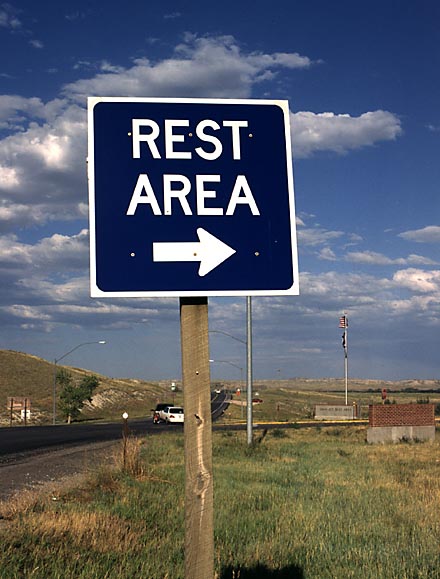
Rest Area 2This past weekend in worship and ABC, we talked about the importance of working smarter rather than harder.  The poster child for the opposite – working harder rather than smarter – was Moses, who, after he explained to his father-in-law Jethro how he was serving as the sole arbiter and judge for all of Israel’s disputes, was told by his father-in-law, “What you are doing is not good.  You and these people who come to you will only wear yourselves out.  The work is too heavy for you; you cannot handle it alone” (Exodus 18:17-18).  Blessedly, Moses humbly swallowed his pride and, in Exodus 18:24, we read, “Moses listened to his father-in-law and did everything he said.”

Moses may have had the good sense to listen to his father-in-law and delegate some of his duties to other trustworthy Israelites, but, even with some much needed help, Moses’ responsibilities did not suddenly became light and easy.  Jethro admits as much when, after encouraging Moses to share his workload with others, he says, “If you do this and God so commands, you will be able to stand the strain” (Exodus 18:23).  Moses’ responsibilities, though fewer, will continue to be straining and stressful.  There will still be plenty for Moses to do.

Perhaps you can relate to Moses.  After all, you, like Moses, have probably been told of the importance of working smarter and not harder.  Yet, no matter how many time management principles you implement and no matter how many tasks you delegate, you, like Moses, may still find yourself awash in a sea of obligations and unexpected troubles that can become overwhelming at times.  What do you do when the principles of working smarter rather than harder fail you?  Jesus shows the way.

Mark 6 proves to be one of the most tragic in the Gospel.  Jesus’ dear friend and cousin, John the Baptist, is beheaded at the behest of Herod Antipas’ stepdaughter.  Jesus is understandably distraught.  But Jesus’ jam-packed calendar of ministry marches on.  In the episode immediately succeeding John the Baptist’s untimely death, Mark notes, “So many people were coming and going that Jesus and His disciples did not even have a chance to eat” (Mark 6:31).  Jesus may be mourning, but the crowds still want to see Him.

It is with the memory of Jesus’ cousin weighing in on Him and the throngs of curiosity seekers pressing down around Him that Jesus issues an invitation to His disciples, “Come with Me by yourselves to a quiet place and get some rest” (Mark 6:31).

Jesus’ invitation is fascinating.  Though Jesus Himself is certainly tired and emotionally spent, Jesus’ primary concern is not with Himself, but with His disciples.  The verbs of His invitation – “come” and “get some rest” – are second person plural verbs.  That is, Jesus is saying to His followers, “You come with Me by yourselves to a quiet place and you get some rest.”  Jesus, knowing that His disciples are exhausted even as He is exhausted, nevertheless has compassion on His disciples and invites them to get some rest by spending time with Him.

Jesus, it seems, is a man of boundless compassion.  He has compassion on His disciples when He invites them to rest with Him.  When Jesus’ plans for a peaceful getaway are foiled because large crowds follow Him to His destination, Mark notes, “He had compassion on them, because they were like sheep without a shepherd.  So He began teaching them many things” (Mark 6:34).  Jesus has compassion on the crowds when He cancels His vacation plans to preach them a sermon.  Following His sermon, when He finds out the crowds He has been teaching are hungry, He has compassion on the multitudes by holding history’s first potluck.  When everyone else forgets to bring a side dish, Jesus takes the meager offering of a little boy – five loaves and two fish – and multiplies it to feed five thousand.

As He does on the disciples when they are tired and as He does on the crowds when they are spiritually lost and physically hungry, Jesus has compassion on you too.  When your life is straining and stressful, Jesus understands.  After all, He has gone through straining and stressful times too – losing loved ones and being exhausted by the rigors of day-to-day ministry.  But Jesus doesn’t just empathize, He can also help.  For the same invitation He offers to His disciples, He extends to you:  “Come with Me by yourselves to a quiet place and get some rest” (Mark 6:31).  Or, as He puts it another time:  “Come to Me, all you who are weary and burdened, and I will give you rest” (Matthew 11:28).

No time management principle – no matter how good it may be – can remove all stress and strain from life.  For life is full of the unexpected.  But no stress or strain – no matter how heavy – can destroy the peace and rest that Jesus gives.  For the peace and rest that Jesus gives is not based on life’s circumstances, but on His promise.  And His promise is stronger than life’s stresses.

So go away with Jesus and get some rest.  You need it.