Posts tagged ‘ISIS’
Why ISIS Cannot Win
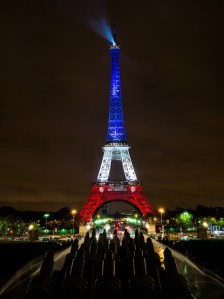
Credit: Yann Caradec | Flickr
Of course, it didn’t take long for these attacks to ignite plenty of red-hot political and geopolitical wrangling. As it turns out, one of the ISIS terrorists allegedly masqueraded as a Syrian refugee to gain entry into France. This begs the question: should Western countries – including the United States – continue to grant asylum to these refugees when their ranks could be infiltrated by ISIS operatives? Then there is the question of how to address ISIS as an organization. French President Francois Hollande declared that “France is at war,” explaining, “Terrorism will not destroy France, because France will destroy it.”
All of this has spawned an understandable – and also predictable – reaction from many across this country and across the world: fear. Even children are afraid. The touching video that has gone viral showing a father allaying his son’s fears in the wake of the deadly attacks demonstrate just how pervasive the emotional devastation has become. People are scared. They want to know: are ISIS operatives planning an attack against this country? Just how powerful is ISIS? What can be done to prevent ISIS from attacking again? What will happen next?
I cannot answer what will happen next with ISIS. I wish I could. I wish I could say that all future ISIS attacks will be thwarted. That is certainly my prayer. But I cannot make it my prediction. But even though I cannot predict what is next for ISIS, I can be sure of what is last for ISIS. What’s last for ISIS is defeat. Of this I am confident.
I am confident of this for two reasons.
First, ISIS is a sectarian actor and sectarian actors, historically, tend not to thrive. ISIS doctrine requires that:
All Muslims must associate exclusively with fellow “true” Muslims and dissociate from anyone not fitting this narrow definition; failure to rule in accordance with God’s law constitutes unbelief; fighting the Islamic State is tantamount to apostasy; all Shi‘a Muslims are apostates deserving of death; and the Muslim Brotherhood and Hamas are traitors against Islam because they compromise with the non-caliphate political process (e.g., democracy).[1]
In short, ISIS believes that anyone who is not part of its cloistered caliphate is not only not a real Muslim, but not even worthy of life. This would be tantamount to Presbyterians wanting to destroy Baptists. This is the ultimate case study in sectarian insanity.
Certainly, Christianity has its own share of hate-filled sectarian groups. The Westboro Baptist Church comes to mind. Historically, Christian sects like the Encratites and the Docetists were rejected because of their abysmal doctrine. Considering ISIS endorses and outright enshrines ritual rape while the rest of the Muslim world stands steadfast on sexual purity, it is not difficult to see how ISIS is not only doctrinally aberrant even among Muslims, but humanitarianly repugnant. And doctrinally aberrant sects tend to collapse – or, at the very least, remain severely segregated – under the weight of their own idiosyncrasies and offensiveness. ISIS may be growing – for now – but sectarian doctrine and practice is not a recipe for longevity or continued growth.
Second, I do not think ISIS will last because of what I believe as a Christian. When Joshua is preparing to go to war against the kings of northern Canaan, God gives to him a curious command: “You are to hamstring their horses and burn their chariots” (Joshua 11:6). Strategically, this does not seem smart. Wouldn’t horses and chariots be helpful for future battles? Aren’t these the kinds of weapons that could benefit Israel’s national security?
God commands Joshua to destroy these tools of war to remind him that it is not he and Israel that will gain victories as they march into the Promised Land, but the Lord. He is the one who is fighting for Israel. No horses or chariots are needed.
ISIS fights with rifles, suicide bombs, and IED’s. But they cannot win, just like the people of Canaan could not win. Why? Because they are fighting the wrong battle using the wrong weapons. They are fighting for a false faith – even by most Muslim standards – with despicably deployed terrorizing weapons of war. As Christians, however, we fight for the true faith using divinely distributed saving weapons of war. ISIS may have a roadside bomb. But we have the sword of the Spirit (cf. Ephesians 6:17). And the sword of the Spirit trumps a terrorist’s bomb every time.
ISIS may manage to pull off some attacks here and there, but they will not last. Because they cannot last. God has promised otherwise.
And so, ISIS needs to be put on notice: there is coming a day when swords will be beaten into plowshares and spears will be forged into pruning hooks (cf. Isaiah 2:4). There is coming a day when your weapons will no longer terrorize nations because your weapons will no longer be around. But the Spirit’s sword will continue to stand.
So, as Christians, let’s stick with that weapon. And let’s find our comfort and confidence in that weapon. After all, it’s a guaranteed winner.
____________________________
[1] Joe Carter, “9 Things You Should Know About Islamic State,” The Gospel Coalition (11.14.2015).
Pray for Paris
 I first heard the news on the radio when I was driving home from work Friday night. Phrases like “breaking news” and “continuing coverage” caught my attention. As more and more details of the ghastly attacks trickled in from across the Atlantic, I knew it was going to be a long night for the people of Paris. 129 dead. 352 injured, 99 critically. And ISIS was claiming responsibility for the coordinated attacks that hit six targets at once. After opening fire on their victims, all but one of ISIS’s operatives blew themselves up when police approached, hoping to kill even more people with suicide bombings.
Considering these attacks came just days after ISIS was suspected of downing Metrojet Flight 9268 over northern Sinai as it was on its way from Sharm el-Sheikh to St. Petersburg, it is quickly becoming apparent that ISIS will stop at nothing to intimidate the world. As of now, their tactics are working. Many, many people are very, very scared.
As Christians, we know we are commanded to be not afraid. The words of Psalmist come to mind: “God is our refuge and strength, an ever-present help in trouble. Therefore we will not fear, though the earth give way and the mountains fall into the heart of the sea” (Psalm 46:1-2). Logically, we also know that fear does us little good at a time like this. It solves nothing. It changes nothing. It only paralyzes us and clouds our judgment. But at the same time we are called not to fear, we are also called to be in prayer. Indeed, the apostle Paul addresses both fear and prayer when he writes, “Do not be anxious about anything, but in everything, by prayer and petition, with thanksgiving, present your requests to God” (Philippians 4:6). At a time like this, when the world is fearing, we should be praying.
As this tragedy continues to unfold, allow me offer four things for which I think we can and should pray. My hope is that God will not only comfort you as you pray these petitions, but that He will use these petitions to help you process what has happened. After all, what has happened affects not only the city of Paris or the nation of France; it affects the world. Nous sommes tous les Parisiens.
On to the prayers.
Pray for Paris.
In one way, this goes without saying. And, thankfully, it is already happening. A quick check of my Twitter account shows #Prayers4Paris is trending. So pray for the grieving. Pray for the fearful. Pray for the people of a city who are trying to pick up the pieces of an illusion of safety that has just been shattered. Pray for Paris.
But let me take this a step farther. Because as Christians, to pray for Paris means to pray for all of Paris – even for those who support and sympathize with the attackers. Jesus admonishes us to pray not only for those with whom we share a kinship, but even for our enemies: “Pray for those who persecute you” (Matthew 5:44). So pray for ISIS operatives in Paris and, for that matter, all over the world. Pray, yes, that any further plots would be thwarted. But also pray that their hearts would be changed. A changed heart stops evil much better than even the most sophisticated international intelligence operation.
Pray for sobriety.
The shock and sadness of yesterday’s attacks will soon dissolve into political posturing and raw outrage. Rash responses will be given. Foolhardy decisions will be made. We need to stay away from all such impulsiveness.
If history is any indication, I am especially concerned that many will fall into what logicians refer to as the fallacy of composition. This fallacy asserts that if something is true for the part, it must also be true for the whole. So in this instance, if a few radical Muslims who are part of ISIS are terrorists, then it is reasonable to be wary of any Muslim because he or she might be a terrorist.
Don’t fall for – or propagate – this fallacy!
I have many friends who own firearms. They are, of course, very responsible and cautious with their weapons. But every time a mass shooting happens – in Roseburg, in Charleston, in Fort Hood, in Sandy Hook – many of them openly worry that the actions of a few deranged lunatics will affect all firearm owners. They worry that people will take the actions of a few and use it to stifle the whole. And so they lobby not only for their rights as firearm owners, but also for their character as people.
What firearm owners do for each other, Christians can and should do for Muslims. Let’s not lose our ability to think soberly and clearly not only about these attacks specifically, but about Muslims generally. The vast majority of Muslims are people who hold much in common, especially ethically, with Christians. They love their families. They despise promiscuity. And they support traditional values like honesty, hard work, and generosity. Let’s be willing to vouch for the character of Muslims. And let’s be willing to support and love them as people.
Pray for governments.
The French government, the U.S. government, and many other governments across the world have some difficult decisions to make. ISIS must be stopped. Thankfully, God has given governments the authority to do just this. The apostle Paul explains:
He who rebels against the [governing] authority is rebelling against what God has instituted, and those who do so will bring judgment on themselves. For rulers hold no terror for those who do right, but for those who do wrong. (Romans 13:2-3)
Paul says that those who rebel against good order arranged by good governments will bring judgment on themselves. For good governments will seek to avenge and deter – often with force – evil events. The terrorists, then, have every reason to be terrified.
As governments across the world try to discern how to respond to these attacks, pray that their responses would be decisive, measured, and Godly. In short, pray that world governments would act in ways that thwart evil while honoring God’s Word.
Pray, “Come, Lord Jesus.”
Ultimately, we know that governments, though they can do much to suppress evil, cannot stop evil. Only God can do that. In fact, shortly before Paul writes his words concerning government, he writes about God’s final judgment: “Do not take revenge, my friends, but leave room for God’s wrath, for it is written: ‘It is Mine to avenge; I will repay,’ says the Lord” (Romans 12:19). God’s vengeance is the only vengeance that gives victory.
When does God avenge evil? On the Last Day. Then and only then will evil be wiped out once and for all. Until then, attacks will happen. Lives will be lost. Evil will rear its head. And we will “groan inwardly as we wait eagerly for our adoption as sons, the redemption of our bodies” (Romans 8:23). Considering that none of this is pleasant or good, the final prayer of the Bible can be our prayer today: “Come, Lord Jesus” (Revelation 22:20). “Come and wipe out evil. Come and make everything – including those hurting in Paris – new.”
And He will.
In Response to ISIS

Credit: The Christian Post
The video was titled, “A Message Signed With Blood to the Nation of the Cross.” In it, 21 Egyptian Christians, dressed in orange jump suits, were gruesomely beheaded by ISIS militants along a beach in Tripoli. One of the final frames of the video zooms in on the waters of the Mediterranean, red with the blood of these martyrs.[1]
Christians aren’t the only targets of ISIS’ rage. Just last week, ISIS released images appearing to show gay men being thrown off buildings only to be stoned after they fell to the ground. A statement released by ISIS explained that the organization is “clamping down on sexual deviance.”[2]
The reaction to such savage killings has understandably been one of untempered ire. Egypt’s president pledged retaliation against ISIS for the slaughter of its Christians. Indeed, Muslims and Christians together are raising a unified chorus of disgust at ISIS’ actions. Andrea Zaki, vice president of the Protestant Churches of Egypt, noted, “With their blood [these martyrs] are unifying Egypt.”[3]
Though the slaughter of Egypt’s Christians has gotten more press than ISIS’ heinous injustices against gay people, both demand a response in addition to whatever political or military responses may be offered in the national and international arenas. Here are two responses that, I believe, are appropriate and important for a moment such as this.
First, we need an anthropological response. After all, whether we are Christian or Muslim, gay or straight, we are all human. Indeed, as Christians, we know and believe that we are all created in God’s image, which affords us not only a shared humanity, but a necessary dignity. This collective humanity and dignity, in turn, involves certain shared hopes and desires. We all desire safety. We all desire respect. We all desire love. When these shared desires are so violently violated, as ISIS has done, basic empathy leads to visceral revulsion. Thus, we can join the world in condemning these acts, if for no other reason than that we are all human.
Second, we also need a theological response. This response is especially urgent because far too many in the broadly secularized West have refused to admit that there are theological drivers behind ISIS’ actions. Writing for The Atlantic, Graeme Wood explains:
We are misled … by a well-intentioned but dishonest campaign to deny the Islamic State’s medieval religious nature … The reality is that the Islamic State is Islamic. Very Islamic. Yes, it has attracted psychopaths and adventure seekers, drawn largely from the disaffected populations of the Middle East and Europe. But the religion preached by its most ardent followers derives from coherent and even learned interpretations of Islam.
Virtually every major decision and law promulgated by the Islamic State adheres to what it calls, in its press and pronouncements, and on its billboards, license plates, stationery, and coins, “the Prophetic methodology,” which means following the prophecy and example of Muhammad, in punctilious detail. Muslims can reject the Islamic State; nearly all do. But pretending that it isn’t actually a religious, millenarian group, with theology that must be understood to be combatted, has already led the United States to underestimate it and back foolish schemes to counter it.[4]
I should point out that parts of Wood’s history of ISIS’ theological origins – especially his claim that ISIS’ theology is of a “medieval religious nature” – are questionable and, thankfully, have been appropriately critiqued. Nevertheless, his basic premise still stands. ISIS is acting in a way that is robustly and rigorously driven by a certain religious understanding. For ISIS, theology is no mere veneer to cover up some naked ambition for power. Theology is at the heart of who they are. Thus, it does us no good, for the sake of some self-imposed, naïve political de rigueur, to pretend that at least some of ISIS’ drivers are not theological.
This is where Christians are in a unique position to lend their voices to the challenges and crises presented by ISIS. For we can offer a better theology than ISIS’ theology. We can rebuke a theology that allows the slaughtering of people with whom they religiously and culturally disagree, as Jesus did with His disciples when they wanted to destroy the Samaritans because they were a people with whom the disciples religiously and culturally disagreed. And when a theology leaves room for stoning those who live outside of traditional sexual ethics, we can say with Jesus, “If any one of you is without sin, let him be the first to throw a stone” (John 8:7).
Blessedly, the parts of this “better theology” I outlined above are ones with which the majority of the Muslim world would agree – because even though this “better theology’s” origins are explicitly Christian, its implications are broadly ethical. And even if ISIS’ understanding of Islamic theology is real, it is certainly not catholic. Plenty – and, in fact, the vast majority – of Muslims share our higher ethical aspirations. Indeed, perhaps what was once a Judeo-Christian ethic can expand into a Judeo-Muslim-Christian ethic.
Ultimately, of course, although theology includes ethics, it is more than just ethical. It is finally soteriological. And this is good. Because this means that even as ISIS continues its campaign of terror, it cannot thwart the promise of God that the faithful who have died at ISIS’ hands are now safe under heaven’s altar. For this we can be thankful. And because of this we can continue to be hopeful.
______________________
[1] Leonardo Blair, “Heartbreaking: Egyptian Christians Were Calling for Jesus During Execution by ISIS in Libya,” The Christian Post (2.18.2015).
[2] Cassandra Vinograd, “ISIS Hurls Gay Men Off Buildings, Stones Them: Analysts,” NBC News (2.15.2015).
[3] Jayson Casper, “Libya’s 21 Christian Martyrs: ‘With Their Blood, They Are Unifying Egypt’” Christianity Today (2.18.2015)
[4] Graeme Wood, “What ISIS Really Wants,” The Atlantic (March 2015).
Tackling Terrorism

Credit: Christian Science Monitor
First it was a chocolatier in Australia. Then it was a school in Pakistan. Terrorist attacks have been headline news this past week.
When an Iranian refugee turned self-styled Muslim cleric named Man Haron Monis barricaded his way inside a Lindt Chocolate Café in Sydney, it took a police raid 16 hours after the siege began to free the hostages trapped inside. Three people, including Monis, died.
When Taliban fighters stormed a crowded school in Peshawar, they managed to kill 145 people over eight hours, 132 of them schoolchildren. Stories are emerging of kids being lined up and shot, or shot as they cowered under their desks. NBC News reports that one teacher was doused with gasoline and burned alive while students were forced to watch.
Once again, we are left grappling with grieving families and terrorized communities. And even though, in both of these instances, the attacks happened across time zones, countries, oceans, and continents, at least a little of the fear there nevertheless comes home to roost here.
This, of course, is exactly what these terrorist organizations want. CNN reports that ISIS is calling on their allies and sympathizers to carry out so called “lone-wolf” attacks in their homelands. They attacks do not have to be big, expensive, and well organized – as were the attacks of 9/11 – they simply have to be frightening. Fear, these criminals know, is a powerful thing.
Certainly, national governments need to put into place policies to try to prevent these attacks. Certainly, law enforcement officials need to have plans in place to deal swiftly and forcefully with any terrorist attack. And certainly, surveillance of and intelligence from terrorist groups and lone wolf sympathizers is needed so governments can know and foil terrorist plots them before they have a chance to carry them out.
But what about us? What about people who are normal, everyday citizens like us who are increasingly frightened that we could be in the wrong place at the wrong time and be mown down by a terrorist attack?
The fact of the matter is this: we cannot control what will happen to us in the future. We do not know whether or not we will fall victim to a terrorist attack. But we can confront and control the fear we feel right now.
The apostle John gives us a simple strategy for dealing with fear: “Perfect love drives out fear” (1 John 4:18). When a mad man or a despicable organization terrifies people with a dastardly deed, what is the best way for the rest of us to respond? By loving those people. Spontaneous tributes to the fallen that have arisen in the wake of these attacks indicate that, already, these communities are banding together to love each other through fear.
As of now, I have not seen any relief efforts that we in the states can participate in to express our love and support to the families of these victims in Australia and Pakistan. But with Christmas fast approaching, my guess is, you know at least one person who, though they may not be terrorized, is fearful in some way. Perhaps you know someone who has lost their spouse this year and is worried about how they will deal with their first Christmas apart from their loved one. Perhaps you know someone who is terminally ill and is facing the very real and understandable fears that come with knowingly being at the end of life. John’s words ring just as true in these cases as they do in cases of terror: “Perfect love drives out fear.”
So love who you can love. For in doing so, you bring peace where there is fear. And in a season when we remember some angels who announced “peace on earth to men” (Luke 2:14) thanks to a “God [who] so loved the world [that] He gave His one and only Son” (John 3:16) so we could “not be afraid” (John 14:27), this is most definitely an appropriate mission.
Peace and Justice in the Face of ISIS

Credit: NBC News
First it was James Foley. Days later, it was Steven Sotloff. The beheading of two journalists by ISIS has certainly thrust the travesties of this terrorist organization to the forefront of our minds and our news cycle. But these are just ISIS’s latest crimes. At the beginning of August, some 50,000 Yazidis were forced to flee into the mountains of Iraq or face death at the hands of ISIS militants. ISIS also kidnapped hundreds Yazidi women, selling them as sex slaves for as little as $25. Last week, The New York Times profiled the gut-wrenching story of Iraqi soldier Ali Hussein Kadhim who was captured along with hundreds of other soldiers by ISIS militants. Christians too have been in ISIS’s crosshairs, being threatened with death if they do not convert to radical Islam or pay a tax.
Back home, President Obama is grappling with how to deal with a terrorist threat and crimes against humanity that are half a world away. And he’s been getting pressure from all sides. On one side, a coalition of religious conservatives has signed a petition calling for decisive military action:
It is imperative that the United States and the international community act immediately and decisively to stop the ISIS … genocide and prevent the further victimization of religious minorities. This goal cannot be achieved apart from the use of military force to degrade and disable ISIS … forces.[1]
On the other side, a group of Catholic and Protestant leaders has written a letter to President, urging caution and restraint:
While the dire plight of Iraqi civilians should compel the international community to respond in some way, U.S. military action is not the answer. Lethal weapons and airstrikes will not remove the threat to a just peace in Iraq. As difficult as it might be, in the face of this great challenge, we believe that the way to address the crisis is through long-term investments in supporting inclusive governance and diplomacy, nonviolent resistance, sustainable development, and community-level peace and reconciliation processes.[2]
This is a crisis no president wants to face. This crisis also presents an ethical dilemma no Christian finds easy to confront. On the one hand, my preference and prayer would be that ISIS repent of their crimes and peace be restored to Iraq. On the other hand, I am sober-minded enough to know that ISIS shows no signs of softening. When even the Taliban is concerned about ISIS’s extremism, things are not on the right track.
So how do we understand this problem theologically?
A curious feature of biblical theology is what scholars refer to as “proleptic eschatology.” In short, proleptic eschatology asserts that bits and pieces of what will happen on the Last Day show up in our days. For example, the apostle Paul claims that Christ’s resurrection is only “the firstfruits of those who have fallen asleep” (1 Corinthians 15:20). In other words, the resurrection of all flesh on the Last Day has shown up in the resurrection of Christ on Easter Sunday. Likewise, Jesus describes His return on the Last Day to judge the earth thusly: “At that time the sign of the Son of Man will appear in the sky, and all the nations of the earth will mourn. They will see the Son of Man coming on the clouds of the sky, with power and great glory” (Matthew 24:30). But before a cosmic judgment on the Last Day, Jesus describes a smaller judgment in the destruction of the temple at Jerusalem in His day: “I tell you the truth, not one stone here will be left on another; every one will be thrown down” (Matthew 24:2). Jesus’ words come to pass when the Roman general Titus decimates Jerusalem in A.D. 70. The judgment of the Last Day shows up in the destruction of Jerusalem in Jesus’ day.
It is this theology of proleptic eschatology that Paul has in mind when he exhorts his readers: “Do not take revenge, my friends, but leave room for God’s wrath, for it is written: ‘It is mine to avenge; I will repay,’ says the Lord” (Romans 12:19). Paul promises that even if we see miscarriages of justice in our day, God will avenge evil on the Last Day.
But that’s not the only day God will avenge evil.
Paul knows the evil of our day, if left unchecked until the Last Day, would yield unspeakable horrors. This is why Paul continues by explaining that bits and pieces of God’s judgment on the Last Day show up in our day through the actions of world governments: “[The governing authority] is God’s servant, an agent of wrath to bring punishment on the wrongdoer” (Romans 13:4). The judgment of God against sin on the Last Day shows up through world governments in our day.
This, then, brings us to the Christian’s ethical dilemma. Because, on the one hand, we are called to wait patiently until the Last Day for God’s perfect judgment and justice to be revealed. On the other hand, governing authorities – including our own governing authority – can be used by God as His agents to bring temporal justice to the criminal problems of our day. This is why two sets of Christians can write two very different letters to President Obama.
I, for one, am praying that perhaps ISIS will have a Jonah moment – that they, like when Jonah preached to Nineveh, will hear the warning of God’s judgment, repent, and be spared of His wrath. But I am also very aware that after the preaching of Jonah to Nineveh came the preaching of Nahum to Nineveh – and with the preaching of Nahum to Nineveh came God’s wrath against Nineveh.
The clock is ticking on ISIS. I pray for peace and reconciliation. But I also pray that justice against these terrorists will not tarry long. The spilled blood of thousands is crying out.
__________________________
[1] “A Plea on Behalf of Victims of ISIS/ISIL Barbarism in Iraq,” iraqrescue.org.
[2] “53 national religious groups, academics, ministers urge alternatives to U.S. military action in Iraq,” Mary Knoll Office for Global Concerns (8.27.2014).


 Pastor Zach's Blog