Posts tagged ‘Hearing’
Listening to Jesus

It can be difficult to listen to Jesus – especially when you don’t like what He has to say. Peter learned this lesson firsthand when Jesus prophesied that:
He must go to Jerusalem and suffer many things at the hands of the elders, the chief priests and the teachers of the law, and that He must be killed and on the third day be raised to life. Peter took Him aside and began to rebuke Him. “Never, Lord!” he said. “This shall never happen to you!” Jesus turned and said to Peter, “Get behind me, Satan! You are a stumbling block to Me; you do not have in mind the concerns of God, but merely human concerns.” (Matthew 16:21-23)
Peter could not fathom that the man he thought to be the Messiah would have to suffer and die. He struggled to hear what Jesus had to say.
Six days after this exchange between Peter and Jesus, Jesus takes Peter, along with James and John, up a mountain where His appearance is transfigured. Moses and Elijah appear along with Jesus and a voice booms from heaven:
“This is my Son, whom I love; with Him I am well pleased. Listen to Him!” (Matthew 17:5)
“Listen to Him.”
After just struggling to listen to Jesus, Peter needed a reminder. We do, too, because we can struggle to listen to Jesus, too. Do we struggle to listen to Jesus when He tells us:
To love our enemies? (Matthew 5:44)
To keep not only our actions, but our hearts, pure? (Matthew 5:28)
To not hold too tightly to the treasures of this world? (Matthew 6:19)
That He loves us unconditionally, even when we feel valueless or unlovable? (Luke 12:7)
The Gospel writer John opens His Gospel by calling Jesus “the Word” (John 1:1). With a title like this, it stands to reason that Jesus has a lot to say. Which means that we have a lot to learn from Him.So, even when it’s hard, let’s listen to Him. What He says matters.
Perceiving and Understanding
In Matthew 13, Jesus tells His disciples about a farmer who goes out one day to scatter seed. Some seed falls on a path, where it is eaten by birds. Other seed falls on some rocks, where it springs up, but then quickly dies. Other seed falls among the thorns, which proves also not to be fertile ground. Finally, some seed falls on good soil, where it springs up and yields a crop. In Jesus’ telling, the seed is His word and our hearts are different kinds of soil. We are to hear His word and let it take deep root in our hearts, like the good soil.
After He finishes His parable, Jesus’ disciples ask Him:
“Why do you speak to the people in parables?” (Matthew 13:10)
Jesus’ answer is insightful and unsettling all at the same time:
The knowledge of the secrets of the kingdom of heaven has been given to you, but not to them. This is why I speak to them in parables: “Though seeing, they do not see; though hearing, they do not hear or understand.” (Matthew 13:11, 13)
Jesus’ final line is an allusion to Isaiah 6:9. The disciples, Jesus says, unlike the crowds who listen to His parables, see Him and perceive who He actually is. They hear Him and understand what He is actually saying.
But not all the time.
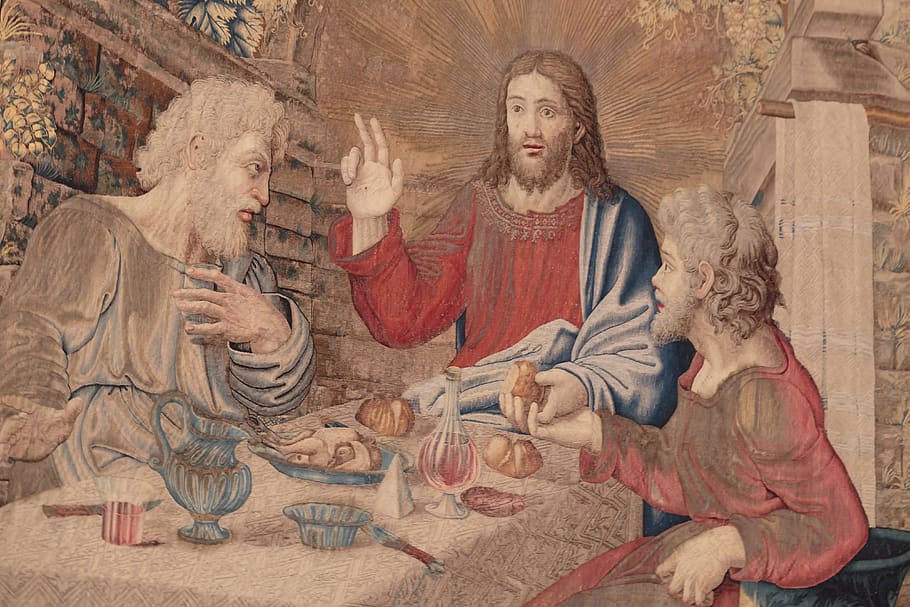
In Luke 24, after Jesus has risen, He appears to two of His disciples while they are walking along a road, but they do not recognize Him. They see Jesus, but they do not perceive who He is. Jesus then asks them what they are talking about. Ironically, they are talking about Him – His death and reports of His resurrection. Jesus responds by explaining to them how the Scriptures forecast, foretell, and point toward Him. But they still don’t get it. They hear Jesus, but they do not understand what He is saying. They are those of whom Isaiah once spoke. The disciples in Luke 24 are behaving like the crowds in Matthew 13.
One of the struggles of the Christian faith is that no matter how much we study, learn, experience, or walk with Jesus, we still have blind spots. There are things we see, but don’t perceive – hear, but don’t understand. Even if we are disciples, we still have a bit of crowd in us.
Walking in faith, then, means “walking humbly with God” (Micah 6:8). It means admitting that for all we may assume we see and know, there’s still plenty of room to grow. But this limitation also leaves blessedly endless room for maturation. This is one of the reasons Christians have been studying the Bible and meditating on the life of Jesus for millennia and are still learning. The treasures of God are inexhaustible.
After Jesus explains how the Scriptures point to Him, the disciples invite Him over for supper, still clueless to who He is. But then:
When He was at the table with them, He took bread, gave thanks, broke it and began to give it to them. Then their eyes were opened and they recognized Him. (Luke 24:30-31)
The disciples perceived and understood anew. This is an experience that can happen for us, too. So, keep seeking to perceive and understand. Jesus will open your eyes as you break bread with Him and He breaks bread for you.


 Pastor Zach's Blog