Sermon Extra: When Being With Jesus Feels Agonizing

Right now at Zion, we’re in a series on the afterlife. This past weekend, I had the heavy and unenviable assignment of preaching on the Bible’s teaching—and warning—about hell.  

One of the things I did not mention in my message is that a recurring description of hell is that it is a place of “gnashing of teeth.”

Consider these passages:

  • “The subjects of the kingdom will be thrown outside, into the darkness, where there will be weeping and gnashing of teeth.” (Matthew 8:12)
  • “They will throw them into the blazing furnace, where there will be weeping and gnashing of teeth.” (Matthew 13:42)
  • “There will be weeping and gnashing of teeth.” (Matthew 13:50)
  • “Throw him outside, into the darkness, where there will be weeping and gnashing of teeth.” (Matthew 22:13)
  • “He will cut him to pieces and assign him a place with the hypocrites, where there will be weeping and gnashing of teeth.” (Matthew 24:51)
  • “Throw that worthless servant outside, into the darkness, where there will be weeping and gnashing of teeth.” (Matthew 25:30)
  • “There will be weeping there, and gnashing of teeth, when you see Abraham, Isaac and Jacob and all the prophets in the kingdom of God, but you yourselves thrown out.” (Luke 13:28)
Continue reading →

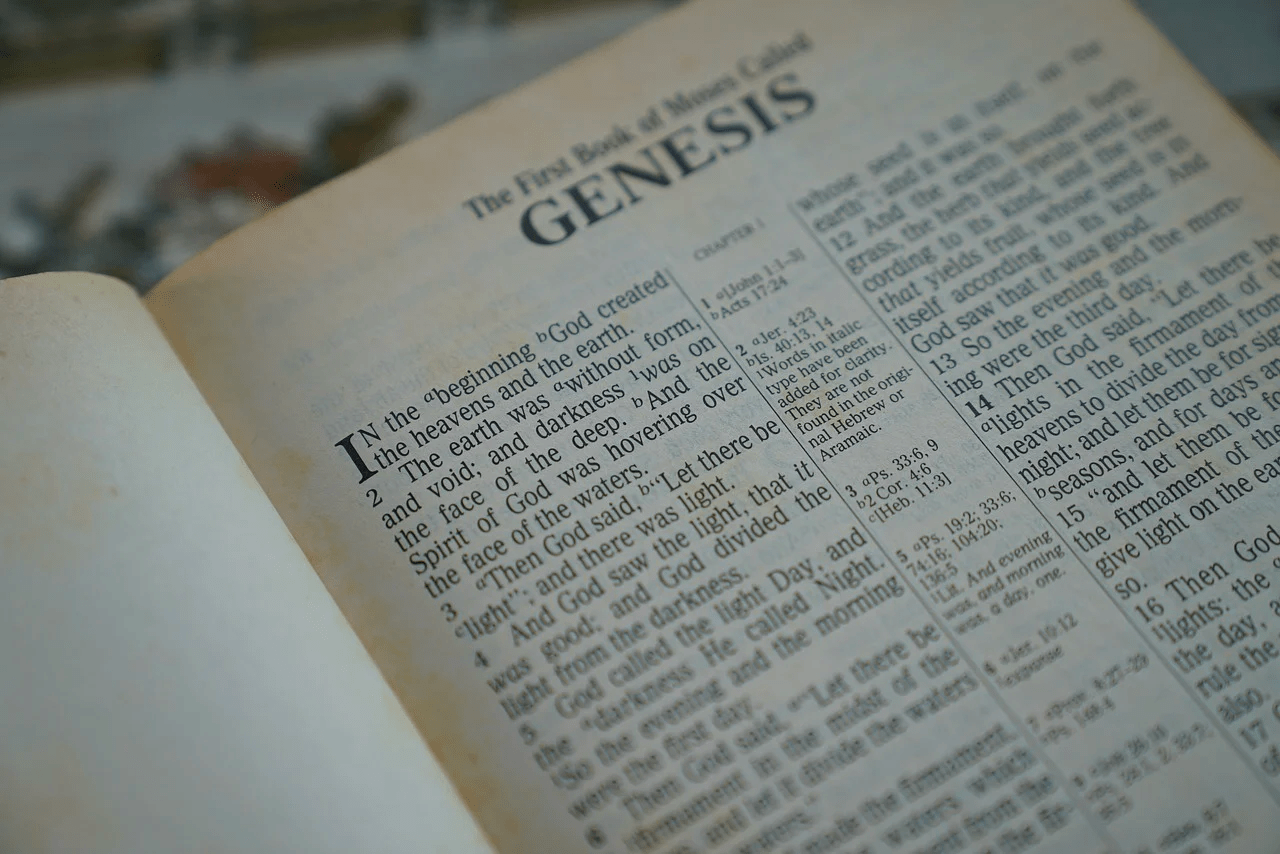
A New Genesis

Credit: Pixabay

The Old Testament opens with these famous words:

In the beginning God created the heavens and the earth. (Genesis 1:1)

In Greek, one word for “beginning” is genesis, which is why we call the first book of the Bible “Genesis.” It is a book about humanity’s beginning.

The New Testament opens with these words:

This is the genealogy of Jesus the Messiah the son of David, the son of Abraham. (Matthew 1:1)

In Greek, the word for “genealogy” is genesis. Matthew opens with a genealogy that describes Jesus from the beginning, which echoes the beginning described in Genesis 1:1 because, as John notes, Jesus “was with God in the beginning” (John 1:2). In other words, there was never a time – even in the very beginning – when Jesus was not.

But there’s more.

A little later in Genesis, we read:

This is the book of the generations of Adam. (Genesis 5:1)

What follows is a genealogy of Adam’s descendants, just like in Matthew we get a genealogy of Jesus’ ancestors. And the Greek word behind “generations” is again genesis.

But by Genesis 5, there is a problem. Adam has fallen into sin and has reaped the consequences of sin, including pain, struggle, and death. In other words, Adam’s beginning is now marching toward a tragic end. He will perish.

The story of Scripture, then, is that of a struggle and search for a new beginning that will not inevitably end in pain, struggle, and death. And in Matthew 1, the Scriptures show us that ever since the beginning of Genesis 1, God has been planning to give us a new beginning in Jesus Christ. Genesis 1 is not the only genesis we have. We have a new genesis in Jesus.

So, where do you need a fresh start? A second chance? A new beginning? What has tragically ended for you in this life? A relationship? A hope? A dream?

Christ takes your first beginning – the one we have in Adam – and nails it to a cross and exchanges it for another beginning that will not end. No ending in this life can stop what will endure eternally in the next life.

Now that’s the kind of new beginning we all need.

The end.

Meaning in Life

Credit: David Foster Wallace by Steve Rhodes / Flickr

David Foster Wallace’s final unfinished novel, The Pale King, describes a handful of IRS employees looking for meaning in life. One employee, Lane Dean Jr., seems to be particularly overwhelmed by the apparent tedious and utter meaninglessness of his job:

The rule was, the more you looked at the clock the slower the time went. None of the wigglers wore a watch, except he saw that some kept them in their pockets for breaks. Clocks on Tingles were not allowed, nor coffee or pop. Try as he might, he could not this last week help envisioning the inward lives of the older men to either side of him, doing this day after day. Getting up on a Monday and chewing their toast and putting their hats and coats on knowing what they were going out the door to come back to for eight hours. This was boredom beyond any boredom he’d ever felt. 

Lane Dean Jr. tries to browbeat his boredom into beauty by imagining a beach, full of sunshine and warmth, but after just an hour of work:

The beach was a winter beach, cold and gray and the dead kelp like the hair of the drowned, and it stayed that way despite all attempts.  

Lane Dean Jr. could not seem, try as he might, to conjure meaning in what felt to him to be a meaninglessness job.

Lane Dean Jr.’s struggle for meaning was a reflection of Wallace’s own intensely personal and desperate struggle. For all of his success as an innovative and creative novelist, who is still widely read and well regarded to this day, he too was on a search for meaning in life. But try as he did, he was simply not resourceful enough to create meaning ex nihilo in his admittedly brilliant novelsAnd his struggle cost him dearly as, tragically, he took his own life.

Wallace’s sad struggle with meaning in life is nothing new. It was King Solomon who once cried:

Meaningless! Meaningless! Utterly meaningless! Everything is meaningless. (Ecclesiastes 1:2)

Solomon, like so many others before and after him, struggled to see meaning in life. Indeed, the Hebrew word for “meaningless” here is hebel, which refers to a “vapor” or “mist.” Solomon knew that so much of the stuff in life that we tout as meaningful – our jobs, our successes, our paychecks, our social networks, and even our morality – always and eventually evaporate before our eyes. They do not and cannot be lastingly meaningful in and of themselves.

So, what is the solution to our futile and desperate attempts to create meaning in life? It is to trade our obsession to create meaning in life for a humble and sincere desire to seek the meaning of life. For life to have lasting meaning, meaning must come from somewhere beyond life and from something larger than life. Humans cannot create true meaning ex nihilo. Instead of being created, true meaning must be revealed. This is why Solomon, after declaring all human attempts to create meaning futile, concludes:

Of making many books there is no end, and much study wearies the body. Now all has been heard; here is the conclusion of the matter: Fear God and keep His commandments, for this is the duty of all mankind. (Ecclesiastes 12:12-13)

People may write volumes upon volumes of books, as did David Foster Wallace, seeking to make life meaningful, but only God and His Word can provide true and lasting meaning. It is in His Word that the true and lasting meaning of life is revealed – to obey God’s commands and to be loved by Him even when we do not.

Is this the foundation of your meaning?

An Everlasting Kingdom

This image has an empty alt attribute; its file name is pexels-photo-3773042.jpeg
Credit: Mario A. Villeda / Pexels.com

Kingdoms crack.

History is littered with kingdoms that, at one time, seemed invincible. They had so much wealth and power that other nations sought resources from them and alliances with them. Assyria was one such kingdom. The prophet Ezekiel pictures Assyria as a tree in which other nations find shade and protection:

All the birds of the sky nested in its boughs, all the animals of the wild gave birth under its branches; all the great nations lived in its shade. (Ezekiel 31:6)

Likewise, the kingdom of Babylon was also an empire to which other nations ran for protection, which is also pictured as a tree by the prophet Daniel:

The tree grew large and strong and its top touched the sky; it was visible to the ends of the earth. Its leaves were beautiful, its fruit abundant, and on it was food for all. Under it the wild animals found shelter, and the birds lived in its branches; from it every creature was fed. (Daniel 4:11-12)

But these kingdoms did not last. Assyria fell to the Babylonians. The Babylonians, in turn, fell to the Persians. By Jesus’ time, the Persians had fallen to the Greeks who then fell to the Romans. The shade and support these kingdoms offered did not last. But Jesus draws from this prophetic imagery of a tree to speak of a kingdom that will last:

The kingdom of heaven is like a mustard seed, which a man took and planted in his field. Though it is the smallest of all seeds, yet when it grows, it is the largest of garden plants and becomes a tree, so that the birds come and perch in its branches. (Matthew 13:31-32)

It can be tempting to seek safety and security in the things of this world’s kingdoms. Money, we believe, can secure our future. The right house or vehicle or boat, we believe, can secure our happiness. The right job, we believe, can secure our fulfillment. And the right soulmate, we believe, can secure our heart.

But all too often, the things of this world’s kingdom fail us. 401ks lose money. Houses, vehicles, and boats break and decay. Jobs are lost. And even the best relationships have draining moments. Only the kingdom of God, Jesus says, offers shelter and safety that lasts. As a bird builds its home in the branches of a tree, we can find our future in the kingdom of God.

So, when this world seems scary, may we remember that our ultimate and eternal safety rests in the branches of God’s kingdom. As the apostle Paul says to Timothy:

The Lord will rescue me from every evil attack and will bring me safely to his heavenly kingdom. To Him be glory for ever and ever. Amen. (2 Timothy 4:18)

How the Church Can Change

Processed with VSCO with a7 preset

“The God I know is not concrete or specific,” wrote Bishop John Shelby Spong in the opening to his famous and controversial 1999 book, Why Christianity Must Change or DieHe continued by outlining a litany of grievances against Christian orthodoxy.  For instance, calling God “Father” bothered the bishop, who labeled this title as “so male, so dated,” and accused Christianity of using this title to “consistently justify its rampant discrimination against women as the will of this patriarchal deity.”  He also took issue with the idea that God would be omniscient, writing:

The Bible, the Church’s sacred textbook, portrays the God of antiquity as acting in ways that violate both our knowledge and our sensibilities today.  If an all-knowing God had really made many of the assumptions that the Bible makes, then this God would be revealed as hopelessly ignorant.  For many biblical assumptions are today dismissed as quite simply wrong.  Sickness, for example, does not result from sin being punished.  Nor does a cure result from our prayers for God’s intervention or from the sense that we have been sufficiently chastised so that the punishment of our sickness might cease.

The only solution, in Bishop Spong’s opinion, was to give up on Theism in search of “another God language.”  In other words, everything in the Christian faith, right down to God Himself, had to change.

Bishop Spong’s two-decade-old sentiments continue to influence our contemporary conversations.  Take, for instance, the comment from California Democratic Assemblyman Al Muratsuchi who, when debating the different ways in which people address same-sex attraction, said, “The faith community, like anyone else, needs to evolve with the times.”

The argument that the Christian faith must change is regularly bolstered by the assertion that the Christian message already has changed.  “Christians used to support slavery,” one person might say, “and they changed their view on that.  So why shouldn’t they change their view on ____________?”  One can fill in the blank with whatever fashionable cause célèbre they want.  The divinity of Christ.  The ethics of human life.  The call to love the marginalized.  The contours of human sexuality.

It is true that some Christians have changed their views – not only on slavery, but on other things as well.  But this does not mean that the teachings of Christ have changed.  Christ, for instance, did not celebrate oppressive systems like slavery.  He came, instead, to bring us out of slavery into a new exodus, accomplished by the cross (cf. Luke 9:31).  Christ, then, never changed His view on the evils of slavery.  Christians, however, have been changed by the teachings of Christ.

There are two ways to understand how change in the Church should work.  Either the Christian faith itself should be revised to keep up with the times or Christians themselves can be refined as they study timeless truth in Scripture.  The first understanding makes the faith subservient to the times and its narcissistic celebration of self.  The second understanding makes Christians subservient to the Scriptures and their forming work throughout the centuries.  The Scriptures make it clear which understanding of change they support:

Do not be conformed to this age, but be transformed by the renewing of your mind, so that you may discern what is the good, pleasing, and perfect will of God. (Romans 12:2)

Christians should continually be “transformed into Christ’s image with ever-increasing glory” (2 Corinthians 3:18).  It would be a tragedy if we were the same people today that we were a decade ago.  By God’s grace and the Spirit’s power, our love, joy, peace, patience, kindness, goodness, faithfulness, gentleness, and self-control should all be growing.  Christians should change.  The Christian faith, however, should not.

The motto of the Reformation was 1 Peter 1:25: Verbum Domini manet in aeternum.  “The Word of the Lord endures forever.”  The Reformers did not want to change the faith, but they did want people to be changed by the faith.  Their goal was to proclaim and explain the faith as it stood – and as it still stands – in the Word of the Lord to the blessing and benefit of all who would receive it.

So, as the Church continues to change, let’s make sure the right thing in the Church is changing – us.