Posts tagged ‘Enoch’
A Tale of Two Lamechs
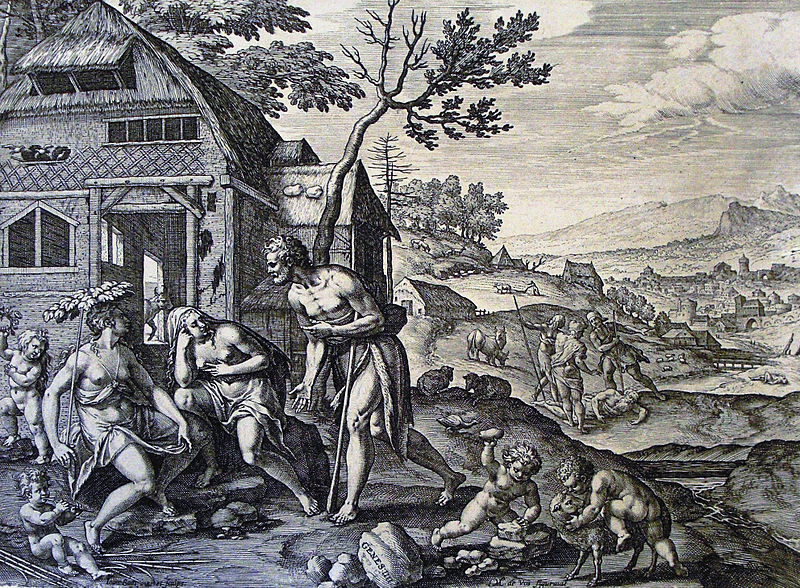
A week ago on this blog, we looked at the genealogy in Genesis 5, which recounts the lineages of the first humans. We focused on one member of this genealogy in particular, Enoch, who, we are told, “was no more, because God took him away” (Genesis 5:24). Though Enoch’s life of 365 years may seem outrageously high compared to our contemporary lifespans, compared to the other people in the genealogy, many of whom lived nearly 1,000 years, his life could be said to have been “cut short.” We discovered, however, that a life cut short is not an indication of a curse. God can bless a short life with eternal life, as He did with Enoch.
This week, I’d like to focus on another character in this genealogy – Lamech, a descendant of one of the sons of Adam and Eve, Seth, and the father of Noah:
When Lamech had lived 182 years, he had a son. He named him Noah and said, “He will comfort us in the labor and painful toil of our hands caused by the ground the LORD has cursed.” After Noah was born, Lamech lived 595 years and had other sons and daughters. Altogether, Lamech lived a total of 777 years, and then he died. (Genesis 5:28-31)
This is the second Lamech we meet in Genesis. The first was a descendant of another one of the sons of Adam and Eve, Cain. This first Lamech was filled with anger and vengeance:
Lamech married two women, one named Adah and the other Zillah. Adah gave birth to Jabal; he was the father of those who live in tents and raise livestock. His brother’s name was Jubal; he was the father of all who play stringed instruments and pipes. Zillah also had a son, Tubal-Cain, who forged all kinds of tools out of bronze and iron. Tubal-Cain’s sister was Naamah. Lamech said to his wives, “Adah and Zillah, listen to me; wives of Lamech, hear my words. I have killed a man for wounding me, a young man for injuring me. If Cain is avenged seven times, then Lamech seventy-seven times.” (Genesis 4:19-24)
Here we find history’s first instance of a polygamous relationship and the second instance of a murder. This first Lamech walks in the footsteps of his forefather Cain as he kills a man, just as Cain killed his brother Abel. This Lamech even refers to his ancestor Cain, to whom God gave the promise of protection in a stroke of grace even after his heinous murder of his brother. After punishing Cain by sending him to a distant land, God promises him: “Anyone who kills Cain will suffer vengeance seven times over” (Genesis 4:15). This Lamech tries to outdo God’s vengeance with his own vengeance, threatening vengeance seventy-seven times over (Genesis 4:24).
This leads us back to the Lamech of Genesis 5. This second Lamech serves as an antithesis to the first Lamech. Whereas the first Lamech willingly participated in the curse of death brought on by sin, this second Lamech seeks to stymie that curse. When God first cursed Adam after he fell into sin, He said:
Cursed is the ground because of you; through painful toil you will eat food from it all the days of your life. (Genesis 3:17)
This Lamech says his son Noah will:
…comfort us in the labor and painful toil of our hands caused by the ground the LORD has cursed. (Genesis 5:29)
The second Lamech seeks righteousness and comfort while the first Lamech sought vengeance by death.
Notice also his lifespan – 777 years. God’s vengeance on Cain’s behalf was seven times over – one seven. The first Lamech’s vengeance on his own behalf was seventy-seven times over – two sevens. But the second Lamech’s righteous life is 777 years – three sevens. It turns out that righteousness and comfort outdo vengeance and violence. The second Lamech’s three sevens crush the first Lamech’s two sevens.
It can be easy to follow the way of the first Lamech. When someone hurts us, we reflexively want to take vengeance. But the way of the second Lamech is where hope is found, as we yearn for someone to undo the curse sin has brought into this world. The second Lamech’s son, Noah, survived the curse of a flood, but was ultimately not unable to undo the curse of sin. But there was One who came from this line who did. Indeed, He reverses the curse of the first Lamech. When one of His disciples, Peter, asks Him:
“Lord, how many times shall I forgive my brother or sister who sins against me? Up to seven times?” Jesus answered, “I tell you, not seven times, but seventy-seven times.” (Matthew 18:21-22)
The first Lamech’s vengeance is overcome by Jesus’ forgiveness, who is the second Lamech’s hope. May He be our hope, too.
Too Young To Die

One of my most sobering tasks as a pastor is participating in funerals. Every funeral is weighty, but those that are for someone who we would say “died too early” carry with them a unique set of challenges. A young child who passes away, for instance, leaves behind intensely grieving parents. A husband or wife who dies in the prime of life leaves behind a devastated spouse.
One of the starkest portraits of life and death comes to us in Genesis 5, which is a genealogy of the first humans. There is a refrain that comes up again and again as each person is listed, beginning with Adam:
Altogether, Adam lived a total of 930 years, and then he died. (Genesis 5:5)
Altogether, Seth lived a total of 912 years, and then he died. (Genesis 5:8)
Altogether, Enosh lived a total of 905 years, and then he died. (Genesis 5:11)
Altogether, Kenan lived a total of 910 years, and then he died. (Genesis 5:14)
Altogether, Mahalalel lived a total of 895 years, and then he died. (Genesis 5:17)
Altogether, Jared lived a total of 962 years, and then he died. (Genesis 5:20)
Altogether, Enoch lived a total of 365 years. Enoch walked faithfully with God; then he was no more, because God took him away. (Genesis 5:23-24)
Altogether, Methuselah lived a total of 969 years, and then he died. (Genesis 5:27)
Altogether, Lamech lived a total of 777 years, and then he died. (Genesis 5:31)
The phrase “and then he died” evinces an inescapable reality: ever since humanity’s fall into sin, people die.
There is, however, a hiccup in this genealogy’s refrain with Enoch. The end of Enoch’s life is not characterized as “death,” but as being “no more” because God took him away (Genesis 5:24). His lifespan is also notable – 365 years. This is by far the shortest lifespan of anyone in this genealogy. Compared with lifespans as long as these, Enoch could easily be said to have been taken from this world too early. And yet, as C. John Collins reminds us in his book Reading Genesis Well in his comments on Enoch:
Apparently, there are higher values and rewards than simply length of days, and the text assumes that there lies something worthwhile beyond the grave for the faithful.
We can sometimes wonder why God takes certain people from us “early.” But, as Enoch reminds us, God taking someone is not an indication of a curse. It can be an indication of a blessing. This reality does not remove the severe sting of a person who passes young, but it does offer hope. What happened with Enoch can happen for them, too. They may be apart from us, but they are with the Lord. And anytime is a good time to be with Him.


 Pastor Zach's Blog